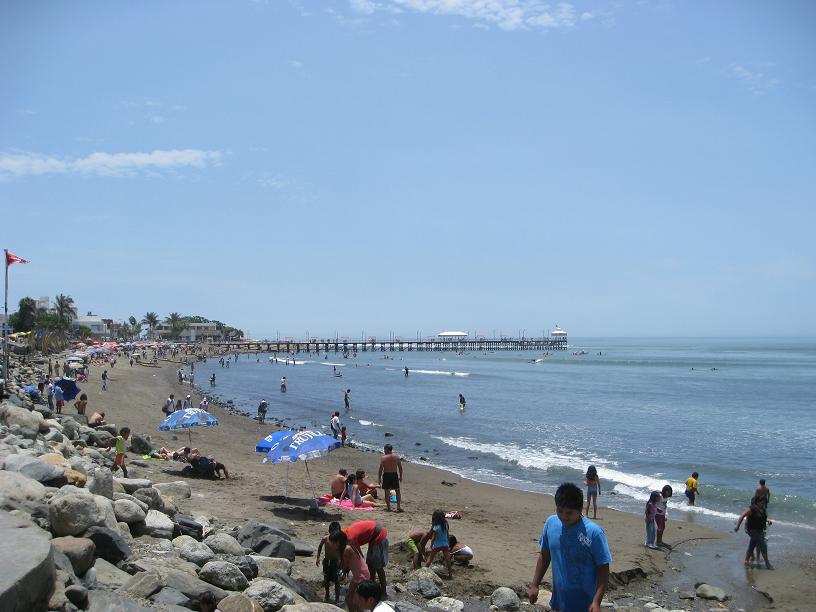
What started as a 3 day beach fix turned into 3 weeks of ´chilling´ in the Peruvian town of Huanchaco (just outside of Trujillo, Peru). The beach bum life consisting of: food, yoga, chilling, more food, more chilling, surfing, sleeping, and repeating ended up being our routine in Huanchaco. This lifestyle became too difficult to give up, so we just kept staying and staying and staying!
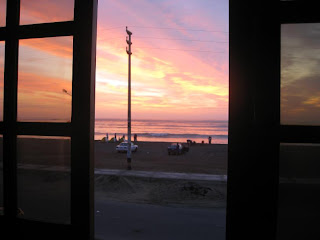
Hostel view 1.
Part of what made it so hard to leave Huanchaco was the fact that our Hostel was located right on the beach and it provided us with amazing nightly sunsets (pictured above). As an added bonus, this hostel also had a bar, fridge, and the first bath tub in all our South American travels (not a bad way to spend $30)!
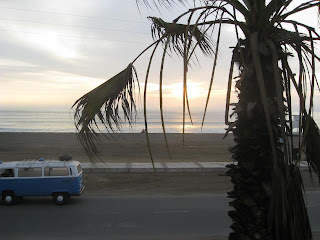
Hostel view 2.
Another reason why it was so easy for us to stay in Huanchaco was that we gained another addition to our traveling family. His name is Licky Skittles. He´s a blue dinosaur that I managed to win in an animal crane in Huanchaco. Licky decided to join us for the rest of our trip, so you might catch him in some of our photographs. This one is of Lydia and Licky enjoying the beach together.
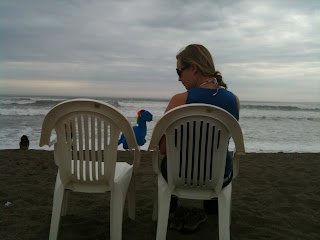
The beaches of Huanchaco were fairly nice. There was fine white sand and continuously crashing waves that were great for viewing and surfing; however, on the downside, Huanchaco´s beaches were filled with trash from the countless unscrupulous visitors to the beach. It is such a frustrating issue, due to the fact that it could be so easily solved with an education campaign coupled with the enforcement of fines, but instead, ignorance leaves the beaches much less desirable than they should be.
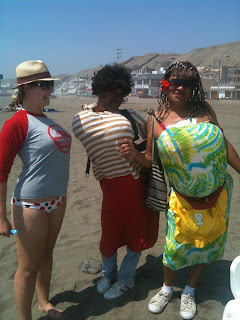
Contributing to the garbage problem in Huanchaco are the beachside snack vendors, who are present in astonishing numbers. With such numbers, they fight for a competitive advantage in selling their tasty treats. Some use bubbles, some use kazoos, and some (pictured below) take a more creative approach to selling candy:

Huanchaco also has to be the festival capital of the universe. It seemed like every other day Huanchacans would be celebrating something! Even when there wasn´t anything to celebrate, the people would park their cars on the beach, open their doors and windows, blast their music, and dance till the break of dawn!
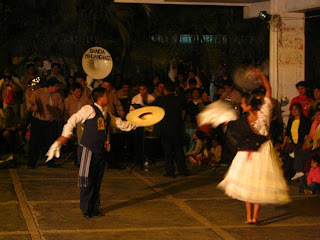
A popular dance during all the Huanchacian festivals is the Marinera (not to be confused with the spaghetti sauce). The Marinera dance is common all over Peru; however, each different region has its own take on the dance. In northern Peru, it´s about quick steps, cowboy hats, and dress twirling (see below).

 At another random Huanchaco festival, the people put on a beachside play about the warring natives of the region. Unfortunately, it seemed that whichever force I cheered for ended up being vanquished :(
Amongst all the warring tribes, a woman in silver paint would romp around striking various poses.
 By changing the exposure rate of my camera, we were able to make this woman look very god-like!
 Hail the conquering heroes!
This festival came by our hotel window one night. I believe it was for one of their sacred virgens, as they carted a virgen statue around with them wherever they went, then put on various demonstrations of offerings for her.
 Amongst the offerings was Marinera dancing of course.
 Lydia liked this festival so much that she offered her soul to the virgen, with the help of this devil character;)
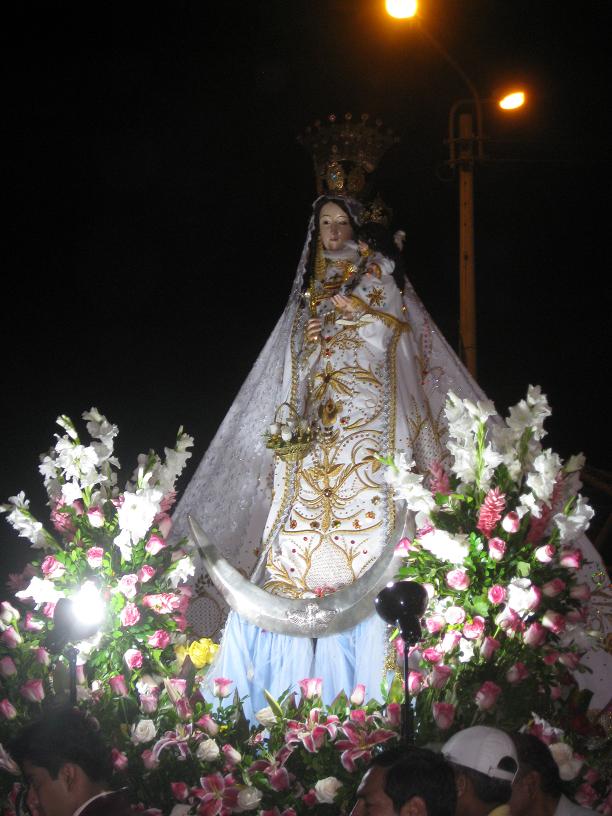 The honoured guest! Notice the scared dove on the left shoulder of the virgen. We think he was tied to the statue, where he had to endure hours upon hours of fireworks! Poor little guy!
The coolest offerings given at this particular festival (asside from Lydia´s soul) were these giant firework statues. The Huanchacians started constructing these structures during the day, only to have them destroyed (most entertainingly) during the evening. I have never witnessed such an awe inspiring display of firey badassedness! Watch the video and enjoy!
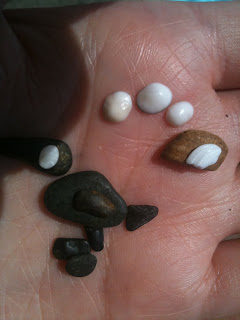 One of the ways Lydia and I liked to pass the time at the beach was by making hand-pebble statues. Pictured above is Lydia´s gold medal winning seagull thinking of a clam. Great work Lydia!
 Looking at the sunset from our hotel room whilst a tranny mentos salesthing pesters a nice couple.
 The Huanchaco/Trujillo area also has some decent ruins in the area. Pictured above and below are the Chan Chan ruins. A large complex of sand structures in the desert about 15 minutes out of Huanchaco.
 The evidence of one slight misshap I had during our surfing at Huanchaco is pictured above. During surf practice, I was standing in the water with my board, and all of a sudden some sea creature (I believe it was either a baracuda, shark, or kraken) decided to latch onto my big toe. In a half a second I was able to kick it off, but it scared the bejesus out of me. After this time, I didn´t spend too much time dily dallying in the ocean (good motivation to stay on the board)!
 We didn´t visit the Trujillo area too much during our visit in this area, but one section of Trujillo that we did enjoy was this public garden.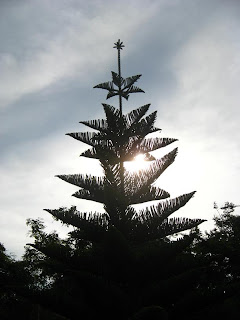
A neat tree found in the Trujillo public garden.
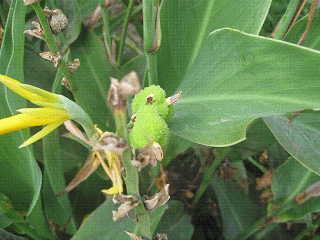
Public garden question #1: Does anyone else think that this collection of plants looks like a bird?
 Public garden question #2: Does this Cactus look happy to you?
This picture is of Licky Skittles enjoying our final sunset in Huanchaco. After our time at the beach was through, we headed straight up into the Andies and the beautiful town of Huaraz.


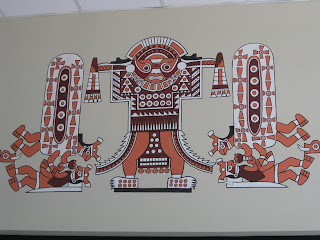

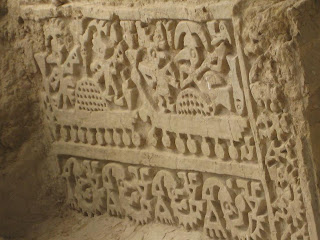 Still, there were some beautifully crafted sand carvings in the walls of the excavated ruins.